Mail:lufagroup@lufagroup.cn
Products
The production quality and processing capacity of our company's various products are at the leading level in the same industry
Home > Product > Silicon metal
Silicon metal
Metallic silicon 421

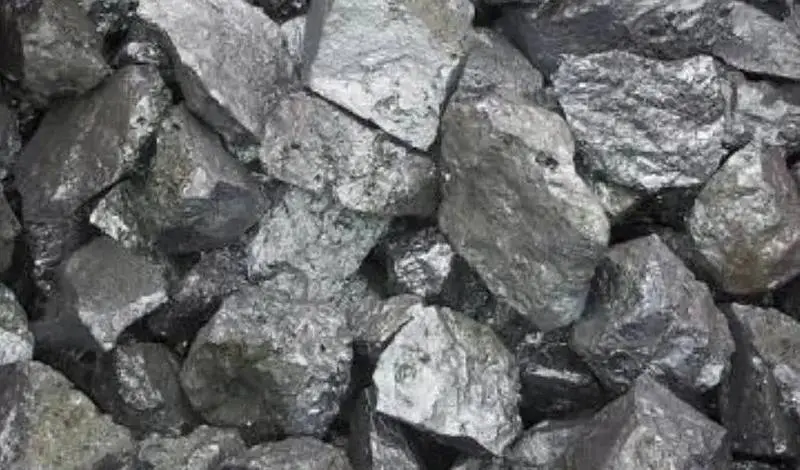
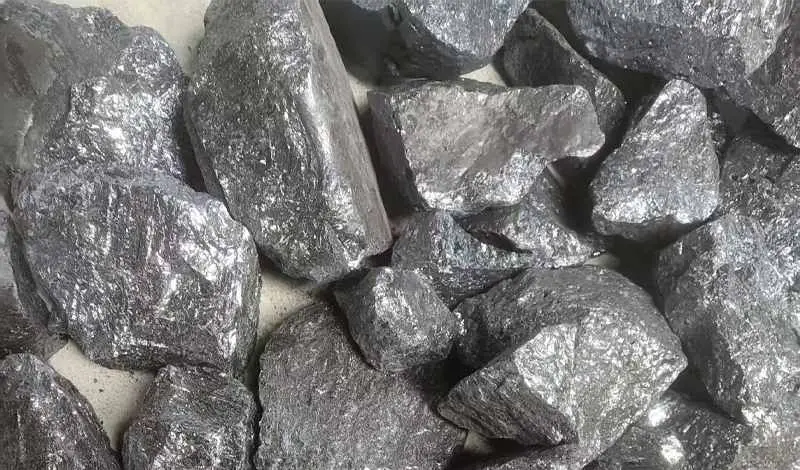
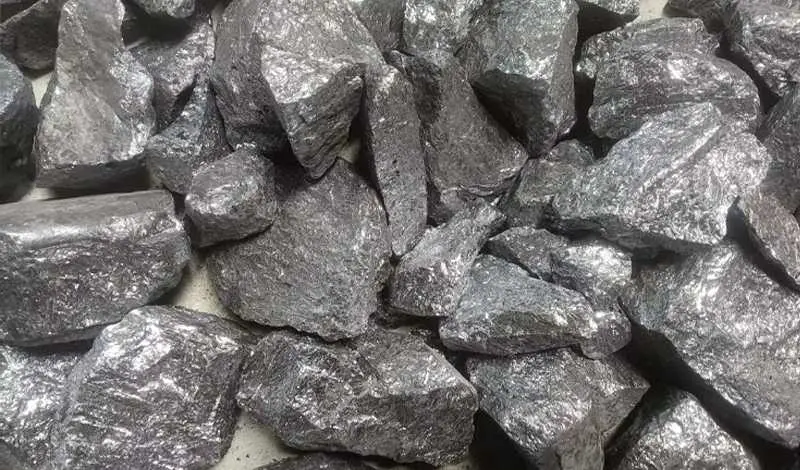
Definition of metallic silicon: Metallic silicon, also known as crystalline silicon or industrial silicon, is primarily used as an additive in non-ferrous alloys. Silicon is a non-metallic element, appearing grayish with a metallic luster, and is hard yet brittle. It constitutes approximately 26% of the Earth's crust by mass; its atomic weight is 28.80; density is 2.33 g/cm³; melting point is 1410°C; boiling point is 2355°C; and resistivity is 2140 Ω·m.

Detailed parameters

Metallic silicon definition: Metallic silicon, also known as crystalline silicon or industrial silicon, is primarily used as an additive in non-ferrous alloys. Silicon is a non-metallic element, appearing gray with a metallic luster, and is hard yet brittle. It constitutes approximately 26% of the Earth's crust by mass; its atomic weight is 28.80; density is 2.33 g/cm³; melting point is 1410°C; boiling point is 2355°C; and resistivity is 2140 Ω·m.

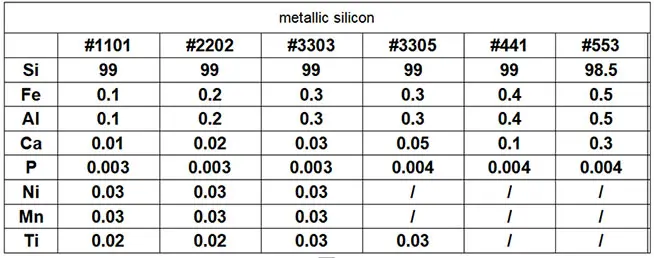
The grades of metallic silicon: Based on the content of iron, aluminum, and calcium, metallic silicon can be classified into different grades such as 553, 441, 411, 421, 3303, 3305, 2202, 2502, 1501, and 1101.

Additional products of metallic silicon include silicon micro powder, edge silicon, black silicon, metallic silicon slag, etc. Silicon micro powder, also known as silicon powder, microsilica powder or silica fume, is widely used in the refractory and concrete industries

The use of metallic silicon

Metallic silicon (Si) is an industrial purified elemental silicon, mainly used for the production of organic silicon, the production of high-purity semiconductor materials, and the preparation of alloys with special purposes.

(1) Production of silicone rubber, silicone resin, silicone oil and other organic silicon

Silicone rubber has good elasticity and high temperature resistance, and is used to make medical supplies, high-temperature resistant gaskets, etc. 

Silicone resin is used in the production of insulation paint, high-temperature coatings, etc.  

Silicone oil is an oily substance whose viscosity is minimally affected by temperature. It is used in the production of advanced lubricants, polishes, fluid springs, dielectric liquids, etc. It can also be processed into a colorless and transparent liquid, which can be sprayed on building surfaces as an advanced waterproofing agent.

(2) Manufacturing high-purity semiconductors

Almost all modern large-scale integrated circuits are made of high-purity metal silicon, which is also the main raw material for producing optical fibers. It can be said that metal silicon has become the fundamental pillar industry of the information age.

(3) Prepare alloy

Silicon aluminum alloy is the most widely used silicon alloy. Silicon aluminum alloy is a strong composite deoxidizer that can replace pure aluminum in steelmaking processes to improve the utilization rate of deoxidizers, purify molten steel, and improve steel quality. Silicon aluminum alloy has low density, low thermal expansion coefficient, good casting performance and wear resistance. The alloy castings cast with it have high impact resistance and good high-pressure density, which can greatly improve the service life. It is commonly used in the production of aerospace and automotive parts.  

Silicon copper alloy has good welding performance and is not prone to sparking when subjected to impact. It has explosion-proof function and can be used to make storage tanks.  

Adding silicon to steel to make silicon steel sheets can greatly improve the magnetic conductivity of steel, reduce hysteresis and eddy current losses, and can be used to manufacture iron cores for transformers and motors, improving their performance.

With the development of science and technology, the application fields of metallic silicon will further expand.

The main production areas of silicon metal: Silicon metal is mainly distributed in Yunnan, Sichuan, Guizhou, Guangxi in southwestern China, Hunan and Hubei in central China, Fujian in eastern China, Heihe and Linjiang in Heilongjiang in northeastern China, Jilin and Liaoning, Inner Mongolia, and Qinghai in Shaanxi.

Metallic silicon is usually classified according to the content of three main impurities: iron, aluminum, and calcium. The main types are as follows:

QQ20260427-174534

图片1

China is a major global producer of metallic silicon, with a total production of 950000 to 1 million tons in 2007 and 750000 to 800000 tons in 2006. In 2007, the domestic consumption of silicon metal in China exceeded 250000 tons, and in recent years, the demand for silicon metal in China has been continuously increasing, with the proportion of domestic consumption in the total production also constantly increasing. The production of metallic silicon in China from January to March 2008 was around 200000-250000 tons. Excluding export volume, China's domestic consumption is around 35000-85000 tons.

China has a relatively large production capacity for metallic silicon, with production mainly concentrated in Guizhou, Yunnan, Fujian, Guangxi, Sichuan, and Hunan. Metallurgical grade silicon metal 553 and 441 have a wide distribution area, mainly in Guizhou, Hunan, Sichuan, Yunnan, Guangxi, Inner Mongolia, Xinjiang and other places. Among them, Guizhou is the most important producer of silicon metal, accounting for 15% -35% of the national output.

Since the beginning of the 21st century, China's industrial silicon production and export have maintained a relatively fast growth rate. In 2001, China exported 322400 tons of industrial silicon. In 2002, it was 387400 tons, and in 2003 it reached 479000 tons. In 2004, it exceeded 500000 tons and reached 545100 tons. In 2005, it was basically the same as in 2004, at 536100 tons. But in 2006, it reached 614000 tons, an increase of 14.6% compared to 2005; In the first half of 2007, the export of industrial silicon reached 698000 tons, an increase of 13.8% compared to the same period in 2006. In recent years, China's industrial silicon exports have increased significantly. Compared to 2001, it increased by 1.16 times in 2007.

The export price of industrial silicon from China has always been low, especially since the 1990s, due to the long-term imposition of high anti-dumping duties by the European Union, the United States, and later Australia on China's industrial silicon exports, as well as the disorderly competition of low-level redundant construction and competitive price reduction in China, the export price of industrial silicon from China has been severely low. Since 2007, the price of industrial silicon exported from China has increased. From January to December 2007, the average offshore price of industrial silicon exported from China was 1381 US dollars per ton, which was 27% higher than the average offshore price for the whole year of 2006.

Starting from January 1, 2008, the provisional tariff for Chinese silicon metal is 10%. The purpose of this tariff increase is to control the export of silicon metal, but despite the tariff increase, the price of Chinese made silicon metal is still the lowest in the international market, with a clear price advantage.

Raw materials for the production of metallic silicon


Silica 165-170 yuan/ton

Fe2O3 0.08%Max.; Al2O3 0.12% Max. CaO 0.07% Max. No edge skin impurities, particle size: 20-60MM.

Charcoal: Ash content 5% Max, volatile content 13% Max. Fixed carbon 70% Min. No mud lumps or debris.

Petroleum coke - Currently, the price of petroleum coke is between 1300-1450 yuan/ton

Ash content 0.6% Max., volatile matter 13% Max., fixed carbon 85% Min., Fe2O3 in ash content 15% Max

Refined coal: Ash content 5% Max, Fe2O3 content in ash 5% Max, volatile content 20% Max, fixed carbon 70% Min


Metallic silicon is produced by reducing silica, also known as industrial silicon or crystalline silicon, and has been a new product for nearly half a century. Mainly exported to countries and regions such as Japan, the United States, Europe, Australia, India, South Korea, Malaysia, Hong Kong, Taiwan, Canada, Mexico, Argentina, etc. Due to the extremely high electricity consumption in smelting silicon metal, the market price of silicon metal is correspondingly high. The main impurities in silicon metal are iron, aluminum, and calcium, which need to be strictly controlled in production. At present, the control of iron and aluminum mainly relies on inspecting silica and charcoal before feeding.


Silica with high iron and aluminum content cannot be used. Charcoal needs to be strictly selected before use (many factories wash silica and charcoal with water before use). The control of calcium mainly relies on the elimination of chlorine gas or oxygen. Oxygen also has a certain effect on eliminating iron and aluminum. Metal silicon used in electronics and chemical industries also has requirements for chromium, bismuth, lead, manganese, titanium, phosphorus, copper, and carbon. Silicon has semiconductor properties. Crystalline silicon has a metallic luster and a bright gray appearance. It is very stable at room temperature, and only very active fluorine can directly react with it to synthesize silicon tetrafluoride.


Silicon generated at high temperatures can also directly react with excess carbon to synthesize silicon carbide. Adding a small amount of metal silicon with a purity of 98% during the smelting of aluminum alloy can greatly improve its performance. Metal silicon with a purity of 98-99% can be used to produce intermediate products such as trichlorosilane, and to prepare hundreds of silicone resin lubricants and waterproof compounds. Metallic silicon is also a raw material for ultra pure silicon in the electronics industry, used to produce monocrystalline silicon and polycrystalline silicon, and is the basic material for large-scale integrated circuits. It is also used to produce optical fibers. As a high-quality semiconductor material, high-purity monocrystalline silicon can be used to manufacture efficient solar cells.


Contact us
TEL:+86 18854108296
Wechat:+86 18854108296
ADDRESS:406-1, Unit 3, Building 7, Shangang Xintiandi, No. 61, Gongye South Road, Jinan Area, China (Shandong) Pilot Free Trade Zone
Please complete the table below. Our goal is to respond within 1 hour.
Back top
WhatsApp
message
email